From our very first breaths, we speak without words. A newborn’s cry, a hungry squirm, a tiny smile are the infant’s first phrases to the world. Long before language forms, babies actively communicate through cries, laughs, and kicks in the womb. As psychologists note, infants “still cannot express their feelings, needs, or wants the way we as adults can, and use nonverbal communication to be understood”.
In this light, art is not a luxury; it is an extension of that primal language. Yet, as we grow, society often forgets this truth, prioritizing the spoken word above all else. When a child with autism paints joy or a dancer with no voice sings through movement, they are speaking an ancient language of the heart. Stereotypes and rigid norms often drown out these voices, but with awareness, we can learn to listen anew.
The Voice of the Voiceless
For those deemed “voiceless,” art often becomes the voice itself. As one Palestinian advocate beautifully puts it, “Art is the voice of the voiceless,” the very “nonverbal language that allows the deaf to communicate with the world”.
This is not merely poetic; it is practical. Programs like the Snehadhara Foundation’s Arts Practices for Inclusion (API) demonstrate that “the arts are powerful tools for change,” helping people connect with themselves and others in deeply meaningful ways. By guiding workshops in painting, music, drama, and dance, Snehadhara empowers individuals with disabilities to express emotions freely.
The impact is tangible. In one study, participants learned to name and share feelings through gestures and color rather than speech. A quiet young adult began to smile and comfort peers; a group that had felt isolated started to laugh and find a shared sense of belonging. Such transformations underscore a critical truth: true inclusion happens only “where there is a sense of belonging and choice… with a freedom to exercise that choice.” When people are allowed to express themselves through art, they feel free, safe, seen, and heard.
Honoring Thanithuvam: The Soul’s Unique Signature
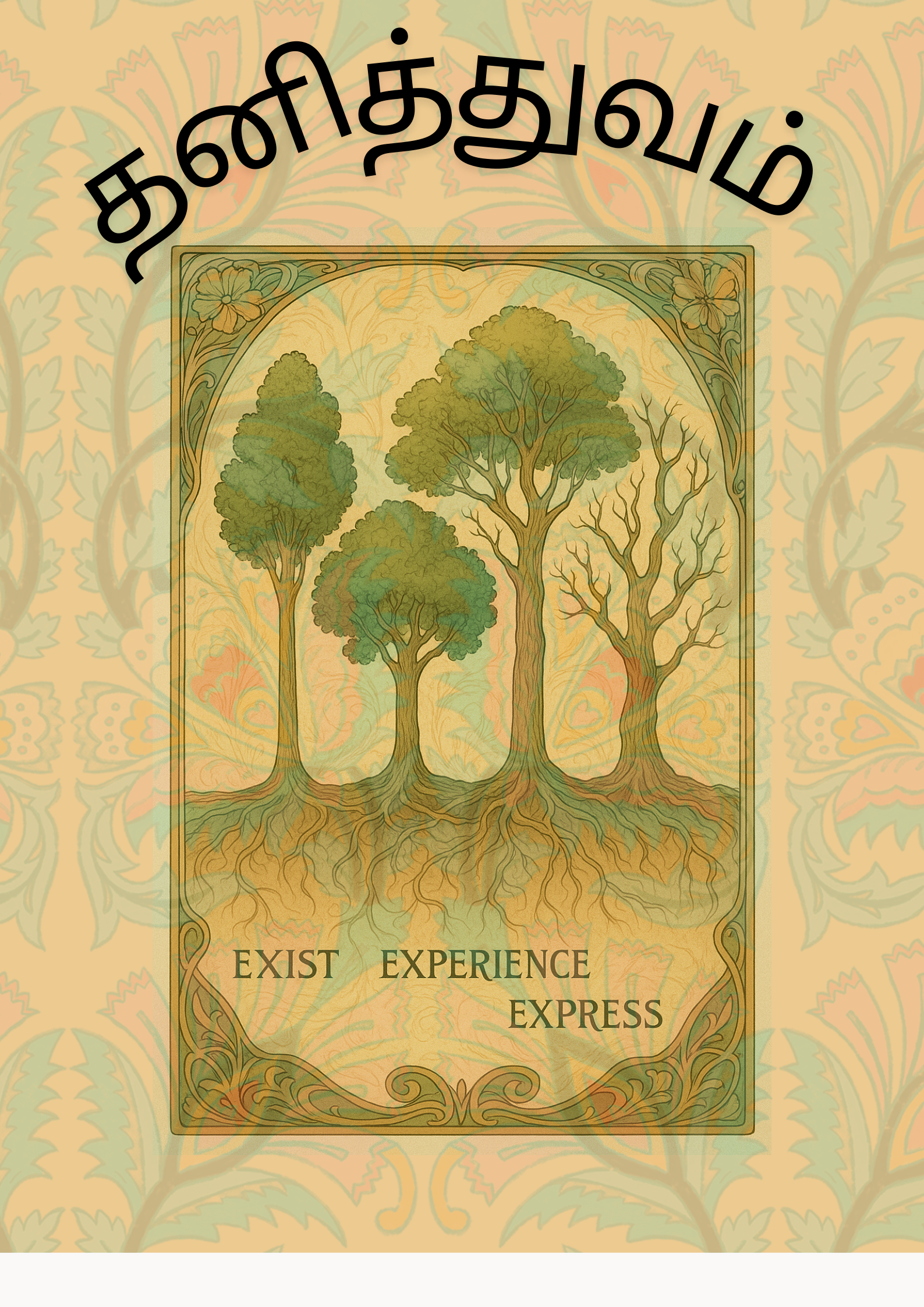
At the heart of this approach is a deep respect for ‘thanithuvam’, a Tamil concept often translated as uniqueness or individuality, but which truly speaks to the distinct “texture” of a person’s soul. If humanity is a symphony, ‘thanithuvam’ is the specific timbre of each instrument. Art allows us to honor not just the note being played, but the instrument playing it.
The journey of the Three E’s: Exist, Experience, Express implies that how we exist in our bodies shapes how we experience the world, and ultimately, how we express it. This is where the true beauty of diversity lies not in everyone saying the same thing, but in the endless, nuanced variations of the same human truths.
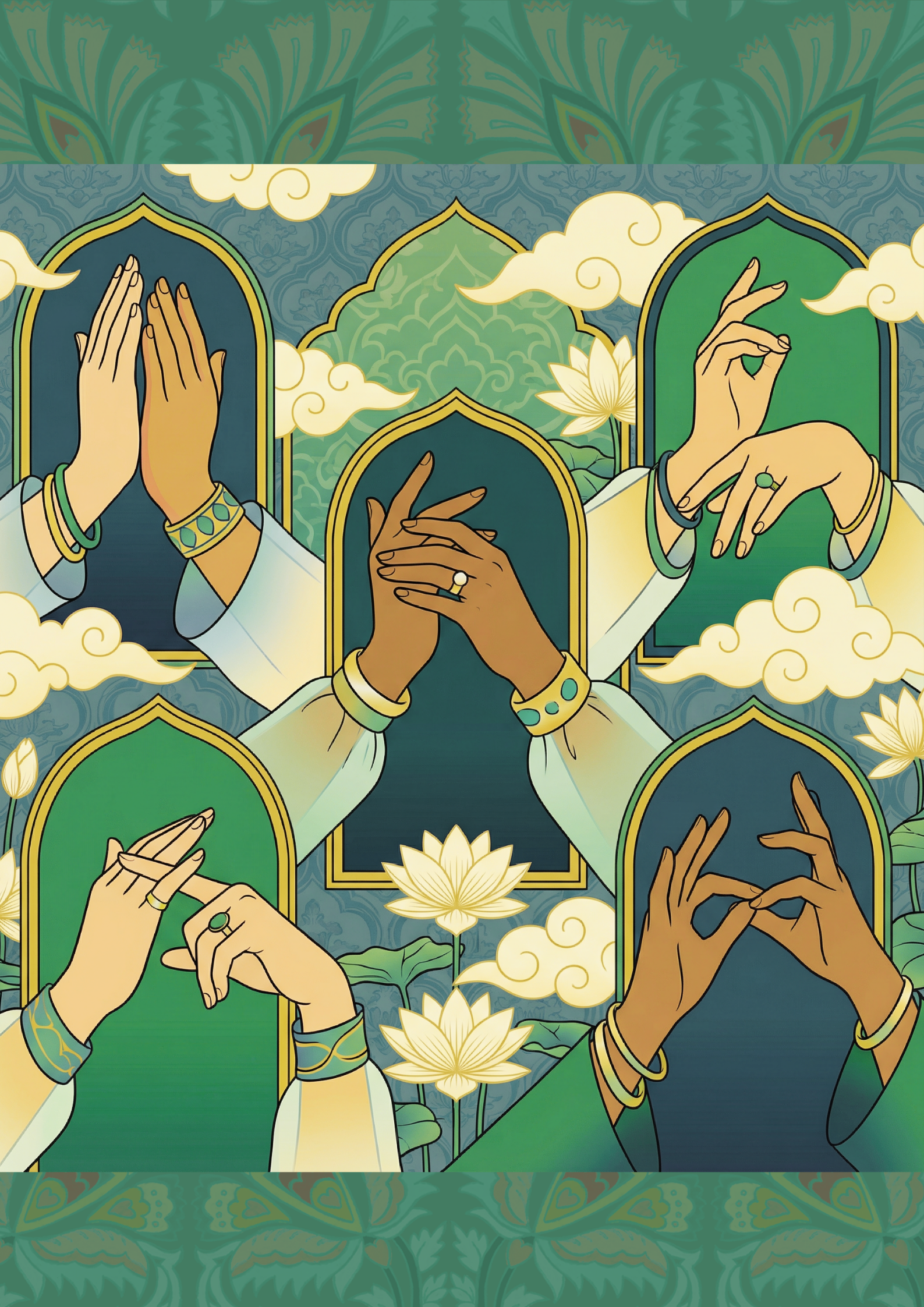
The Many Faces of Navarasa
Consider the Navarasa (nine rasas), the universal spectrum of human emotion: Wonder, Laughter, Sorrow, Anger, Courage, Love, Fear, Disgust, and Peace. While these emotions are universal, their expression is deeply personal, filtered through the lens of ‘thanithuvam’.
Hasya (Laughter or Joy), for example. For a baby, Hasya is visceral and sensory. It is triggered by the immediate game of peek-a-boo, a bright color, a tickle. Their expression is uninhibited: a toothless, open-mouthed gurgle, whole-body wiggles, and kicking legs. Their “moral” universe is simple: I am safe, I am loved, this feels good.
Contrast this with an elderly man sitting on a park bench. His Hasya is rooted in memory and values. He might not laugh at a bright color, but he smiles at the irony of a situation or the sight of a grandchild mastering a skill he once knew. His expression is quieter crinkled eyes, a subtle nod, a slow, deep chuckle that rattles in his chest.
His joy is tinged with the wisdom of survival; he loves what endures.The emotion is the same joy but the “thanithuvam” transforms it. The baby’s joy is a splash of bright yellow paint; the elder’s joy is a deep, warm ochre.Or consider Raudra (Anger). A dancer on stage might express Raudra through stomping feet, wide eyes, and Mudras (hand gestures) that depict the slaying of a demon. It is theatrical, mythical, and external.
But for a teenager with cerebral palsy who struggles to be understood, Raudra looks different. It might be a sharp, intense gaze, a stiffening of the shoulders, or a frantic, abstract splash of red on a canvas. His anger is not about demons; it is about the friction of a world that doesn’t always accommodate him. It is a righteous, personal fire.
By recognizing these differences, we stop expecting “standard” expressions. We learn that a non-verbal child’s flapping hands can be as profound an expression of Adbhuta (Wonder) as a poet’s sonnet. We affirm their specific likes, their distinct dislikes, and their unique moral compass.
From Reaction to Response
On a practical level, art teaches us the difference between a reaction and a response. An emotion is felt inwardly, but expression is its outward echo. A knee-jerk reaction might flare up in fear or selfishness, but a thoughtful response is crafted with care.
In therapy and teaching, this distinction is vital. When anger arises, a child might first scream (reaction), but with practice, they can channel that energy into clay modeling or drumming (response). This turns momentary fury into a creative force. In doing so, they practice empathy transforming a private feeling into a form that can soothe, inspire, or enlighten another person. It is a profound lesson in interconnectedness: our expressions affect others, so sharing creativity is itself an act of kindness.
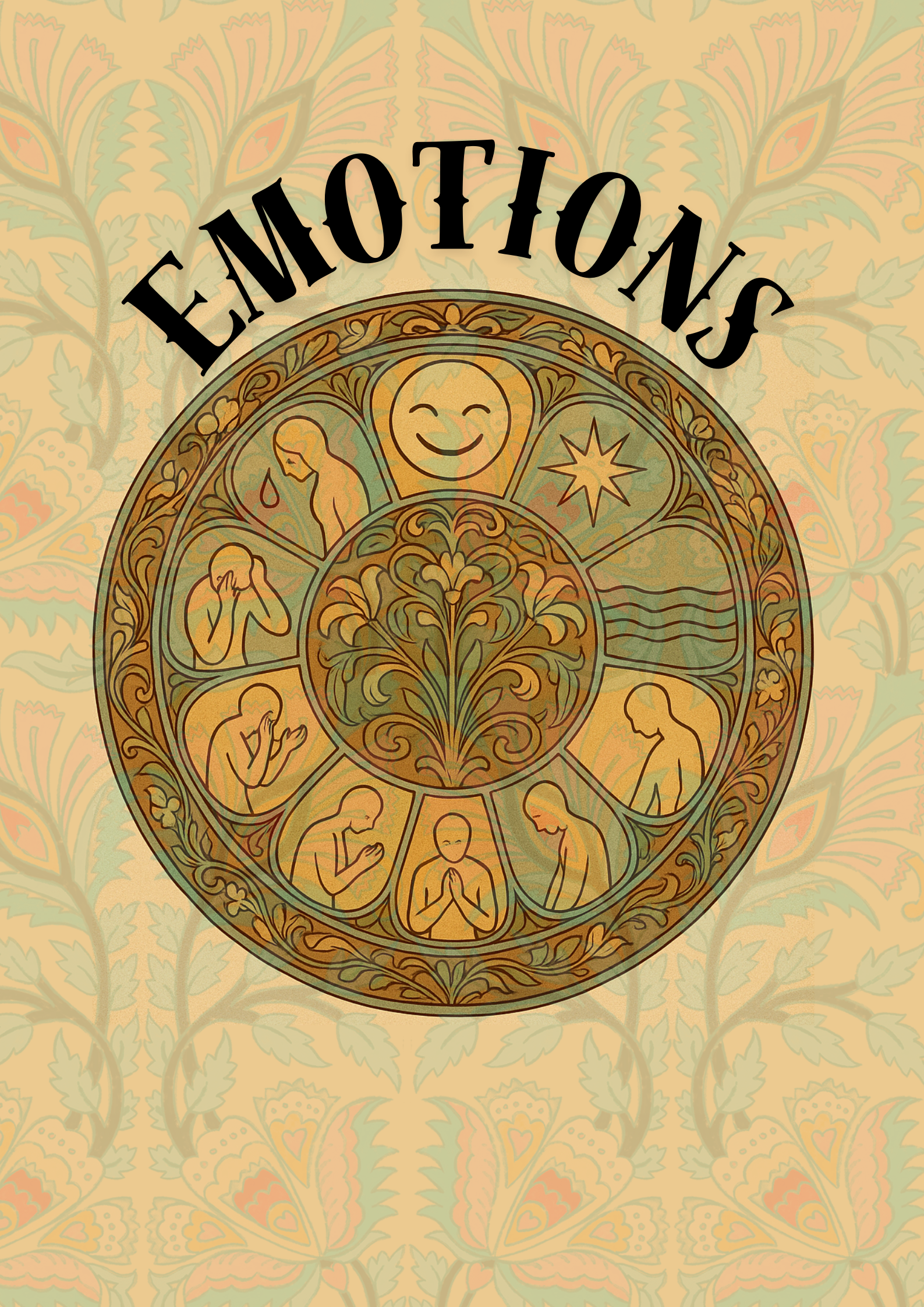
A Symphony of Inclusion
Crucially, this intense individuality does not lead to isolation. By sharing these unique expressions in a community gallery or classroom, we discover kindred spirits. The elder’s quiet smile grounds the baby’s giggles; the teenager’s red canvas resonates with the dancer’s stomping feet.
When we allow everyone to express their Navarasa in their own dialect, visual, vocal, or physical, we create a living, breathing tapestry. We weave individuality into the collective fabric, helping people find others who share their vision even as they remain uniquely themselves.
In the end, inclusion through art is not charity; it is wisdom. It teaches us that every person’s expression is a gift, a new way to see the world. By honoring ‘thanithuvam’, combating stereotypes, and opening our hearts to all rasas, we build a community where no one is truly voiceless. Together, let us paint, sing, dance, and listen embracing the full spectrum of human emotion with empathy and joy.