Hi, I am Shreya Talwar, graduate of the 9th API batch. I joined Snehadhara as an API Practitioner and Trainer right after completing my certification. This is a pit stop for reflection as I begin to carry this work outside of the first space I ever took API to. This is an honest work in progress account of what I understand of API today and the project that shaped this understanding.
A set of activities that can be copy pasted onto any group without any contextual reference is not what molded my ideas of ‘inclusion through the arts’. Even a well thought of session plan with a set of structured activities can lead to chaos. Oh dear, it is those moments of chaos that made me see things a little differently. It was never about the activities alone. Here’s how –
After facilitating my first 45 sessions at a school attended by children of migrant labourers in Ghaziabad, I was deep into a well of questions. Yes, not answers but questions.
Questions about – why does one participant not want to speak in front of a particular someone else? Why are children trying to run away with materials when repeatedly assured there’s enough for everyone? What would happen if I show up consistently with the same set of negotiations: there is room for everyone to participate, but if you don’t want to, you don’t have to. What would happen if the sessions were happening in a vacuum where I didn’t have to negotiate with the administration at the organization (here, these talks looked a little different- who gets to access the sessions? on what basis? and how frequently?) What happens when there is resistance and discomfort in the group because of different social identities and class positions? What can the arts really do to help me make sense of this?
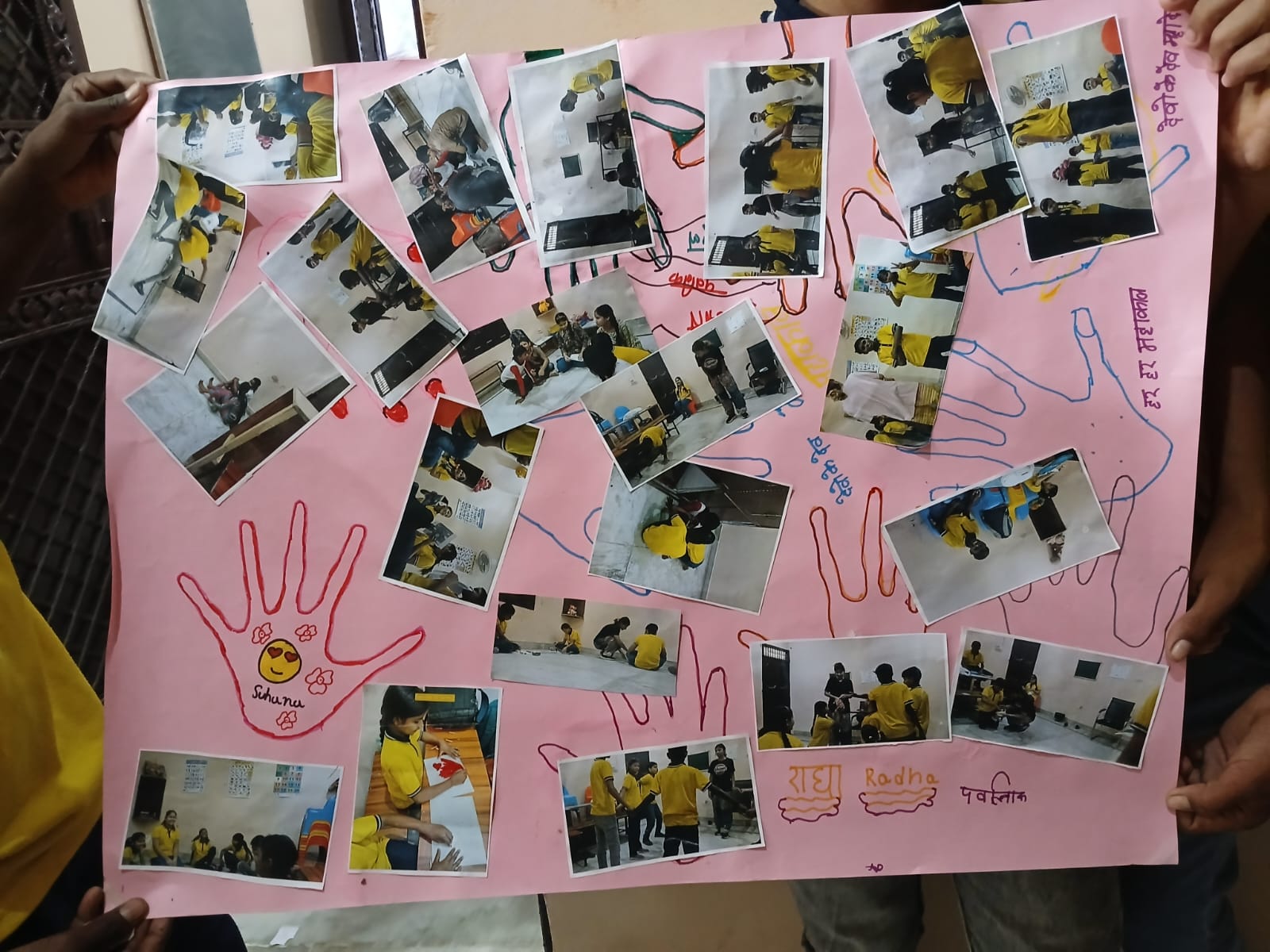
I planned and implemented: Project ‘PAL’, an acronym for Play, Arts and Love to deepen my explorations. The main purpose of Pal was to create opportunities for both groups to get to know each other beyond their roles of ‘student’ and ‘teacher’. I chose this as a goal to work with, specifically due to the conversations I overheard or sometimes had to directly be a part of with the teachers, these were around the identities of the students. The dialogue was sharp with unforgiving judgements with a blend of care and control in the mix. Some of them were: “they are poor and addicted to begging”, “they only come to school for namesake and will return to doing labour work no matter what”, “their brains are incapable of learning anything else”. I fastened my seatbelt to navigate through the Jenga of power, identity and participation.
Throughout the 8 day project I saw changing patterns of participation between the members of my session (the students aged 5-13) and teachers making space for these sessions. In the small 2bhk flat running a school with 30-40 children– for 2 hours the rooms became a little louder, a little bigger, a little more breathable.
Coming together, even when viewed as an end in itself, was not always easy to achieve.
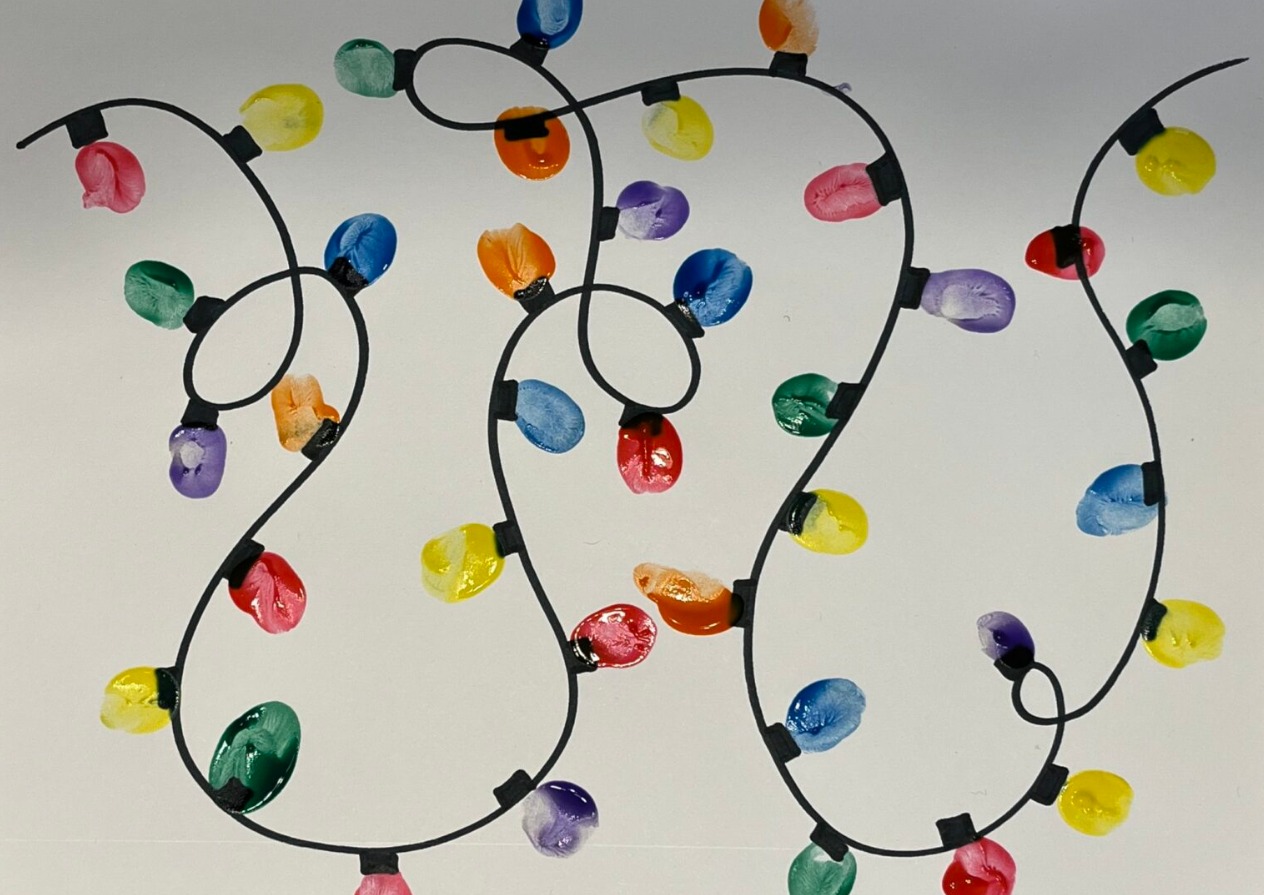
Afterall, there needs to be something that calls out to the individual to join the circle on their own accord. That’s where lesson number one shone. The arts provide the group as a whole something to stay anchored by, while opening up different entry points of access to its members. In essence, the session design blooms full under the light of the unique intersections of engagement by each of its members. The term “stakeholder” in API is not a namesake–how the goals are interacted with flows its course around the banks of each member’s style of participation. Let’s look at an instance from my sessions– a fingerpainting activity that was intended to create a string of Christmas lights together ended up creating a “road to nowhere and everywhere”. The way the members placed their tiny fingerprints on the collective sheet of paper shaped the discussion that followed. It paved the way for a facet of their emotional landscape, in the present context of their social standing within the group, to be expressed.
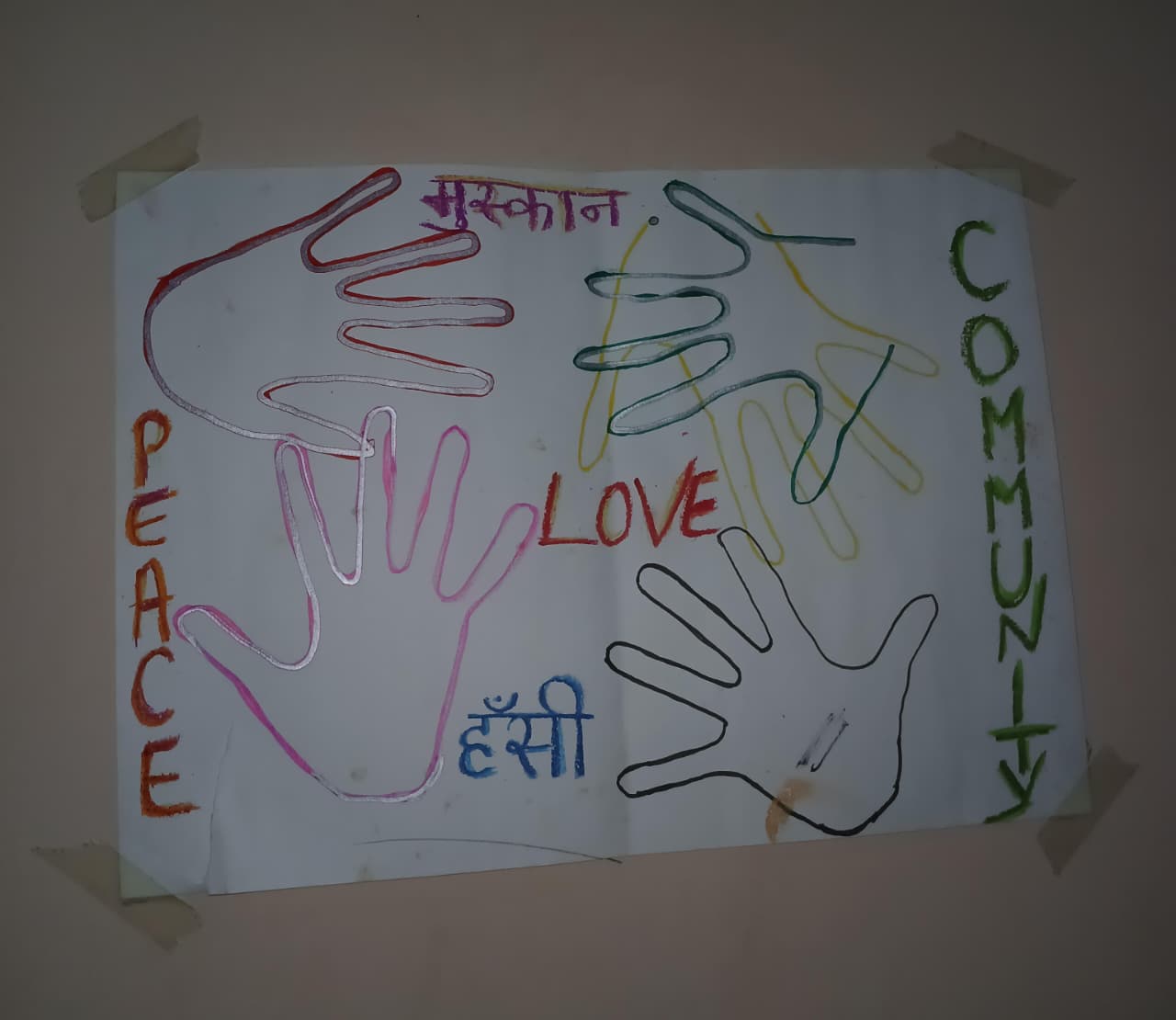
Another example that comes to mind is: a session plan that did not land with one group, worked perfectly well in terms of participation and reflection with another group. The different social realities shared by each group made their interaction and relationship with a particular art form distinct. Lesson number two became vivid with experiential proof– the relationship between the arts, the members interacting with it and each other is shaped by their lived experiences. These experiences are shaped by complex layers of ‘conditions of life’ which are maintained by systemic factors (Shaikh, 2024, p. 46). These conditions range across: access and stability; life experiences of safety, abuse, neglect; and intergenerational factors such as multidimensional poverty and caste discrimination. In this way, the arts become a living force. Arts become something to be chosen, to make meaning of, and to be shared. While ‘art’ may signal a type of specific practice with one art form; ‘arts’ in API broadens our relationship with the multitude of the entire practice. Choice becomes an important marker of the session when the forum is open and inclusive of all distinct ways of interacting with the arts. There is no one ‘correct’ way to participate in a space that speaks in the fluid language of the arts. When one member exercises a choice to engage with music through tapping, the other may choose to colour the shades of music, the possibilities are endless!
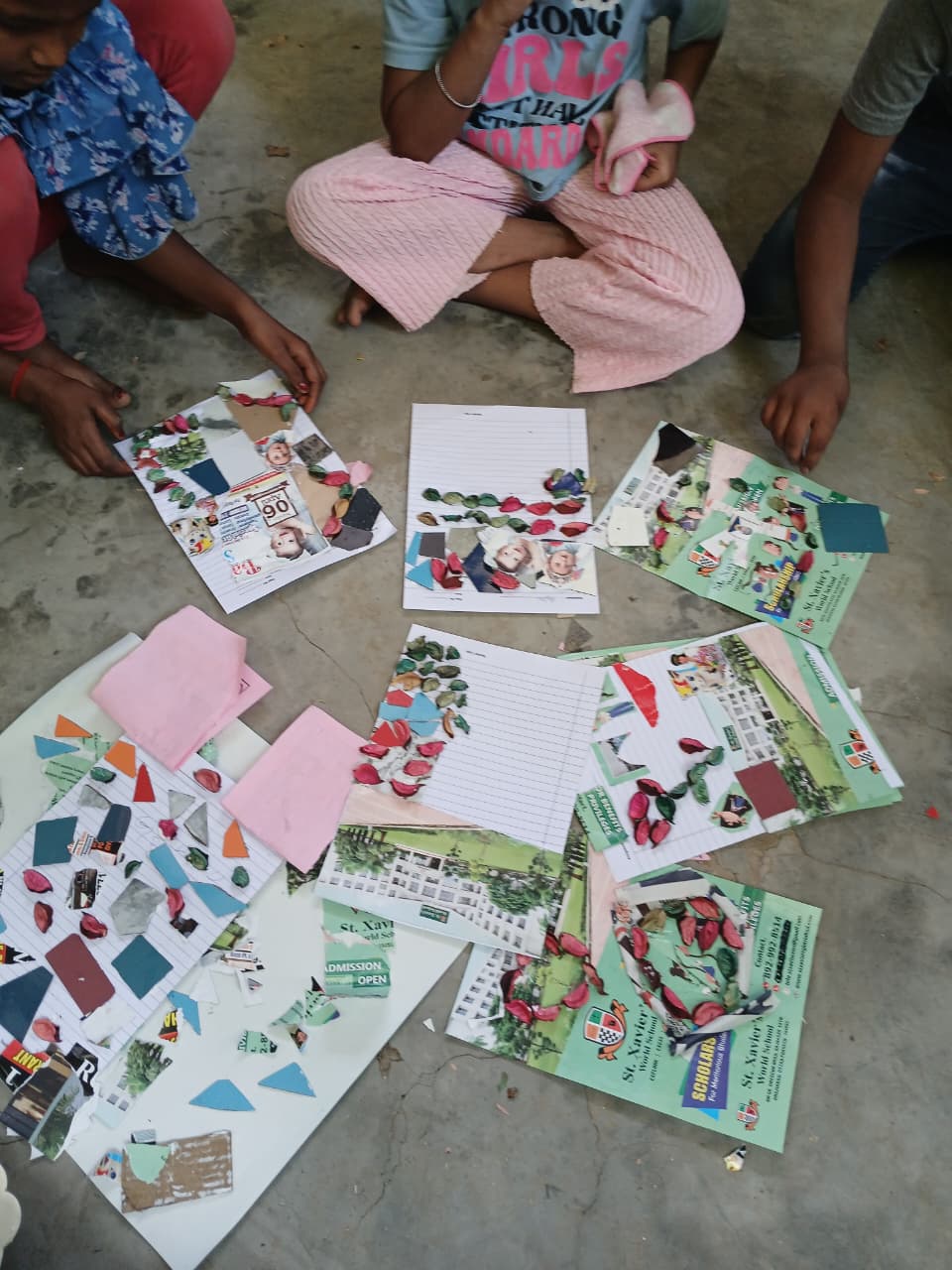
API gives shifting power a structure. Imagine you introduce a topic to a group of energetic children and then keep talking without a pause. They are surely to take over the session with chatter and the urge to move. API holds this need with care. When you’re trained in this methodology, it becomes clear that pauses are not empty. Pauses allow for creativity to sprawl and wiggle, for questions to find expression, and for conversations to take deeper roots. And more importantly, agency becomes a practice. In these pauses, members can explore, experiment and test boundaries. They can play with negotiations between members and the norms of the shared space. These are practiced and these practices become the ‘creation(s)’ of an API session – not the art activity, not only what the facilitator can hold and take pictures of. API asks– where can we go from this point, together?
Back to PAL, the most profound impact was the transformation of the staff-facilitator dynamic. What began as active dismissal, labeling sessions “no use to the children”, evolved by Day 8 into a collaborative partnership. Teachers began actively seeking creative suggestions, marking a fundamental shift from skepticism to trust and shared empathy. These moments become a playing field where the innate kindness of each member can blossom (lesson number infinity!). Free from the pressure to produce a specified outcome or meet goals destined for an academic credit score, participants are released from the performance of fitting into a future-facing role. Instead, these inclusive circles are a true celebration of the ‘here and now’, a testament to the ‘becoming’ that occurs when we move together with kindness and curiosity.
Why do I think API can be something that can be integrated into any institutionalized space?
Through my earlier sessions and PAL, I saw that the API sessions successfully shifted institutional rigidities in the liminal space, fostering moments of co-regulation and group membership. While power struggles and classroom identities persisted, the transition from punitive discipline to reflective silence proved that arts-based ‘Inclusion Circles’ can bridge emotional gaps, allowing both children and teachers to reclaim their agency through Play, Arts and Love.
I would like the readers to be guided by the inquiry: “What is holding our attention, and how are we shaping it together?”
For me, a takeaway from the 8 sessions that I held using API at the school operated by an NGO was: the proprioceptive-seeking behaviors observed such as children pushing, fighting for material possession, or seeking physical containment are somatic expressions of a nervous system navigating trauma and material insecurity. Integrating nature-based, outdoor sessions would provide the grounding children deserve.
API is a lens through which I see the hope in education and care spaces.
A learning for future: sustained impact requires moving beyond momentary glimmers of connection. Repeated exposure to sessions centered on love and joy functions as vital vagus nerve training, shifting the nervous system from a state of high-alert defense to one of rootedness. Without consistent integration into the daily classroom schedule, these breakthroughs risk slipping back into the rigid power dynamics of institutionalized spaces. True inclusion necessitates a permanent, grounded environment where safety is a lived, repetitive practice.
We often hear words like:
“Listen.”
“Make space.”
“Be inclusive.”
But what does that actually look like in real life? API believes that: being named, being listened to, being witnessed with care can slowly create: safety, connection, trust and belonging. But this does not happen automatically. It depends on: where the interaction happens, how the space is held, who gets to make choices, whose voice shapes the experience, and whether people feel pressured to perform or free to participate. True inclusion is not: “Everyone must join in the same way.” It is creating opportunities where people feel welcome enough to participate —while also respecting their freedom to choose how they engage.