
CSR is not just about what we fund. It is about what we make possible together.
As Snehadhara Foundation approaches its 14th year, we find ourselves reflecting on the many people and organisations who have made this journey possible. Some came as friends, some as individuals who believed in an idea, and others through chance conversations, shared concerns, or a willingness to support something they had never encountered before. Over time, these relationships grew into institutional partnerships, corporate collaborations, and CSR engagements. Somewhere along the way, we began asking ourselves a larger question: What does CSR really mean to us?
Of course, resources matter. Without them, much of the work we do would simply not be possible. Reaching communities, training practitioners, creating inclusive spaces, and sustaining care for people who need long-term support all require financial commitment. But nearly 14 years have taught us that funding is only one part of the story.
We have seen partnerships that began with a project and grew into relationships. We have learnt from corporate partners who brought rigour, systems, accountability, and questions that made us look at our own work differently. We have also encountered the tensions that come with working across two very different worlds. A project may have a beginning and an end, but the needs of a community rarely do. A reporting framework may ask for measurable outcomes within a defined period, but trust, belonging, confidence, and changes in attitudes do not always follow a calendar. A programme may reach hundreds of people, yet sometimes the most significant change is in how one person is seen, heard, or included.


Perhaps one of our biggest learnings has been that the timelines of projects and the timelines of people’s lives are not always the same.
A child finding the confidence to participate, an adult learning to make choices, a family beginning to trust a support system, or an educator questioning a long-held assumption about disability may take far longer than a project cycle allows. These changes matter, even when they are difficult to capture in a report. At the same time, we recognise that accountability, documentation, and evidence are essential. The challenge is not to choose between numbers and human experiences, but to find ways of understanding both.
How do we hold these realities together? How do we remain accountable without reducing human experiences to numbers? How do we build partnerships that allow for uncertainty, learning, and even failure? And how do we ensure that the work continues long after a funding cycle ends? These are questions we continue to sit with, both in our conversations with partners and in examining our own practice.
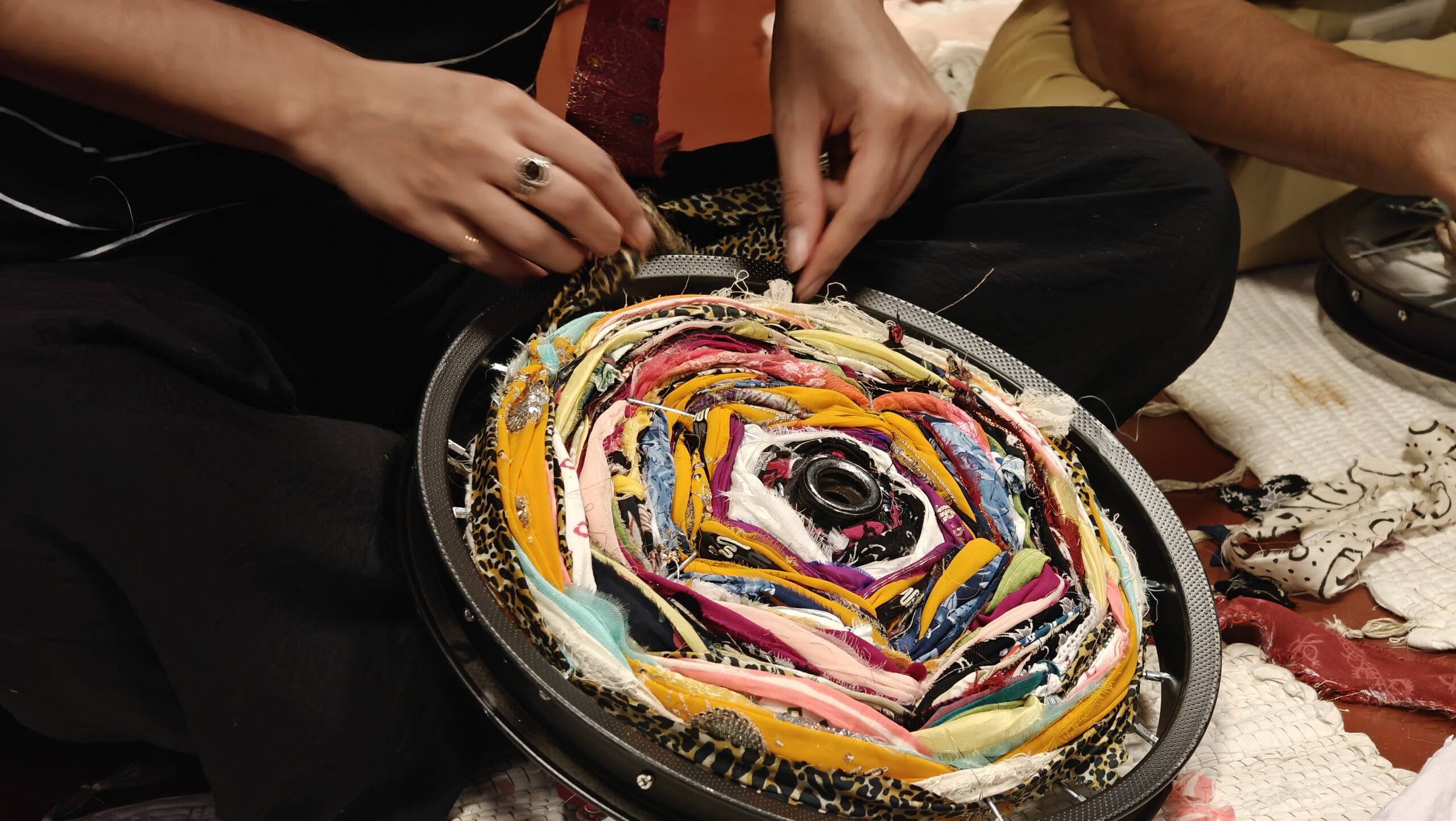
At Snehadhara, we have often thought of CSR as something larger than Corporate Social Responsibility. Perhaps it is also Collective Social Responsibility, rooted in Care, Solidarity, and Relationships. Not because financial responsibility is any less important, but because meaningful change asks something of all of us. It asks organisations like ours to remain accountable, reflective, and willing to learn. It asks those who support us to understand that working with people and communities is rarely linear. And it asks both to recognise that neither brings all the answers.
As we approach our 14th year, we are grateful for every person and organisation that has walked alongside us. But gratitude is not the only reason for this reflection. We are also curious about what the next chapter of partnerships could look like. Can we move from funding projects to investing in possibilities? From measuring only what changes to understanding what it takes for change to happen? Can we create relationships where both sides have the space to ask difficult questions, acknowledge what isn’t working, and remain committed to learning together?
Perhaps after nearly 14 years, we are still learning what it truly means to stand together. And perhaps that is what makes this conversation worth continuing.
For those who have been on either side of a CSR partnership, what has made the relationship meaningful beyond the funding itself?